Project Overview
The client set out to establish a super-premium position in the single-serve cat food market by introducing an 85g aluminium can format.
While their existing portfolio included:
- Steel cans (200g–1.2kg)
- Flexible pouches (85g–100g)
they identified a strategic opportunity in aluminium cans—a segment largely dominated by Nestlé Purina’s Gourmet range—but with room for premium and own-label innovation.
A 12-month timeline was defined to meet launch at a major European trade show, requiring rapid decision-making—often before final product specifications were confirmed.
1. Parallel Workstreams – Enabling Speed Without Chaos
To meet the aggressive timeline, the project was structured into parallel workstreams, each with:
- Clear objectives
- Defined milestones
- Interdependencies mapped early
Initial face-to-face workshops accelerated alignment during the critical early phase, followed by:
- Fortnightly virtual meetings
- Transition to monthly cadence as stability increased
Key early agreements included:
- 5-year demand forecasts (to size equipment correctly)
- Product concept (texture, visual appearance in-can and plated)
- Aluminium can and end specifications
- Supply logistics and delivery formats
Packaging formats were designed to support multiple market needs:
- Introductory multipacks (e.g. 4 flavours)
- Larger retail packs (12, 24, 48 units)
2. Managing Long Lead Times
With 6–9 month lead times on critical equipment, early commitment was essential.
Priority equipment included:
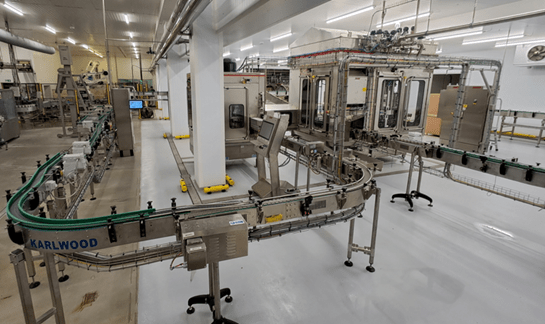
- Can handling systems (depalletising to retort loading)
- Filling and seaming equipment
- Pre-retort stacking solutions
Secondary packaging was designed as a hybrid model:
- Automated case packing for high-volume SKUs
- Manual packing for flexibility and lower-volume variants
Existing autoclaves (retorts) were upgraded with recirculating airflow, significantly improving heat transfer through stacked aluminium cans.
3. Process Design – Flexibility Meets Innovation
Process design evolved in parallel with product development, heavily informed by pilot trials and hand samples.
A multi-stream batch-to-continuous hybrid system was implemented, combining:
- Gravy systems
- Minced and chopped meat
- Emulsified meat
- Steam-formed chunks
- Vegetable inclusions
- Flavour systems
Thermal control was achieved through:
- Direct steam injection
- Jacketed vessels with hot water heating
Although based on familiar unit operations, the innovation lay in integrating them into a single flexible system.
4. One-Shot Filling – A Key Strategic Decision
A major departure from industry norms was the move to single-shot filling (vs. traditional 2–3 stage filling).
This delivered:
- Simpler line design
- Reduced contamination risk
- Improved efficiency
To protect product integrity and seam quality:
- Large cavity pumps ensured gentle product transfer
- Vertical piston fillers enabled precise, clean filling
This was particularly critical for aluminium cans, where seam contamination can lead to failure.
Results & Impact
- Line commissioned on schedule for trade show launch
- Immediate commercial success with strong order intake
- By Year 2, production volumes matched Year 4 projections
Key Takeaways
This project demonstrates how fast-track delivery can succeed without compromising quality, when supported by:
- Well-structured parallel workstreams
- Early alignment on critical assumptions
- Strong cross-functional collaboration
- A shared commitment to outcomes
Rather than becoming “a recipe for disaster,” the compressed timeline became a competitive advantage—accelerating market entry and driving early growth.


Leave a Reply